


Posted on Google 


W Hunter
Trustindex verifies that the original source of the review is Google. Aaron J. Visited our home later this evening to follow up with today’s install and the system checked out as it should. The only issue we had was connecting and setting up the wireless thermostat due to the app issues. He was very professional and patient. John and Joe replaced our 2nd floor gas heating system in a professional manner. Everything went smooth according to them and they finished the job in less time than expected. Aaron was professional and extremely thorough during his visit to our home. He took the time to explain the workings of our HVAC system and answered every question. To add to the above, I called the office and spoke with both Austin and Jason who were also very helpful while explaining the warranty and transfer of same. We are extremely pleased with Automatic Climate and will highly recommend to anyone who may ask for recommendations.
Thank you for sharing your positive experience! We're thrilled Aaron, Austin, and Jason could assist you so thoroughly. Your recommendation means a lot, and we're glad we could help with your HVAC system and warranty details.
Thank you for sharing your positive experience! We're thrilled Aaron, Austin, and Jason could assist you so thoroughly. Your recommendation means a lot, and we're glad we could help with your HVAC system and warranty details.
Posted on Google

Steven Ebeling
Trustindex verifies that the original source of the review is Google. I had a very positive experience with them. They had better financing options, better prices, and were more responsive than other companies I got quotes from. Michael Chris and the whole team were fantastic. Highly recommend
Posted on Google

WTL
Trustindex verifies that the original source of the review is Google. Technician was on time, personable and professional. He throughly explained everything that he was going to do and identified any concerns. Very pleased with the overall experience and would recommend to other homeowners
Posted on Google

Peter Greer
Trustindex verifies that the original source of the review is Google. I had the coils cleaned in my tankless water heater. Aaron Jernigan was so seemingly competent, so well-mannered, so good explaining what was going on, I am considering switching to Automatic Climate, I will definitely have all the vents in my house blown out in the near future.
Posted on Google

Allen Baldwin
Trustindex verifies that the original source of the review is Google. Fast, friendly, knowledgeable and professional. Their associate, Casey J, helped fix our heat when we were enduring 20-30 degree nights. Thank you so much!!
Posted on Google

Craig Lisk
Trustindex verifies that the original source of the review is Google. Charlie was very dedicated. Provided excellent service. Very impressed with his dedication. Did check on HVAC and cleaned drier vent in Condo we purchased last summer.
Posted on Google

Tiffany Hollin-Wright
Trustindex verifies that the original source of the review is Google. I've been a customer of Automatic Climate for several years. I value the services of this firm. My commitment to renewing my maintenance contract year after year is directly related to the technical expertise of one of the company’s many representatives, Antonio Diaz. Antonio has kept all three of my units running smoothly for years, and when necessary forewarns me early of any pending issues. He offers solutions right away without long waits for follow up. I've never had to call the company back to correct any of his work. Antonio attributes his success and extraordinary customer service to the culture of Automatic Climate. I would recommend Antonio and Automatic Climate to any of my friends and neighbors. They're a company you can trust.
Thank you so much for your kind words! We're thrilled to hear you had a positive experience with our service.
Thank you so much for your kind words! We're thrilled to hear you had a positive experience with our service.
Posted on Google

William Gleason
Trustindex verifies that the original source of the review is Google. John & Nick were here today to clean our air ducts. They were very thorough and made sure that they left our home as clean as when they arrived. They explained the process clearly and worked efficiently. Great job!
Verified by Trustindex
Trustindex verified badge is the Universal Symbol of Trust. Only the greatest companies can get the verified badge who has a review score above 4.5, based on customer reviews over the past 12 months. Read more

$39 A/C
Tune-Up!
Take advantage of this limited time offer. Keep your home cool this summer with Automatic Climate!*
*Expires 12/30/25. Offer can’t be combined with other offers or promotions. Offer valid for existing and new clients.
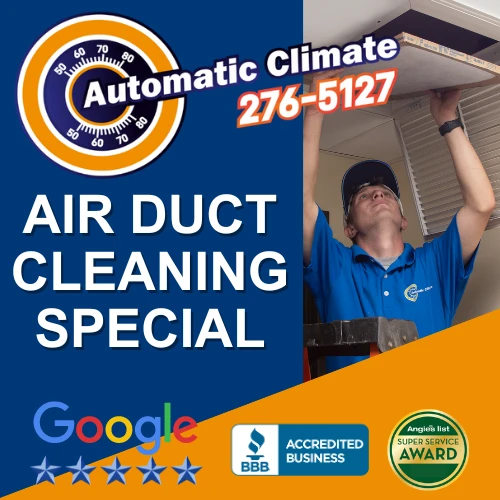
$50 OFF Air
Duct Cleaning
Save $50 on your next air duct cleaning service for a limited time!*
*Expires 12/30/25. Offer can’t be combined with other offers or promotions. Offer valid for existing and new clients.

$49 Water
Heater Flush
Take advantage of this $49 water heater flush and make sure your water is heating properly!*
*Expires 12/30/25. Offer can’t be combined with other offers or promotions. Offer valid for existing and new clients.