

Key takeaways
- Room-temperature behavior is more useful than hand feel alone.
- Persistent temperature loss deserves a heating check.
- Keep advanced controls and equipment internals with the professional.
A heat pump blowing cool air in heating mode can still be heating your home. Air at a register can feel mild compared with furnace heat, so judge comfort by whether the room reaches and holds the thermostat setting. A brief change during defrost can also be normal. Persistent temperature loss, heavy ice or a new harsh noise calls for a heating check.
Heat pump blowing cool air: what does the room tell you?
Check 1: Compare room temperature with the setting
Write down the starting reading and the thermostat setting. Check again when the airflow changes and once more after it settles. An isolated reading is easy to misinterpret, especially if someone just opened an exterior door or the thermostat recently returned from a setback. If the room recovers, note what changed around the same time. If the room keeps cooling during a call for heat, tell the service team how long you observed the trend and whether it repeated.
One cold room can also be a separate clue. If the thermostat area feels comfortable but a bedroom stays cold, note whether closing the door makes a difference and whether airflow in that room seems weaker than usual. Compare it with an adjacent room under the same conditions. A technician can use that description to decide where to start. The reading alone cannot distinguish a distribution issue from another source of heat loss.
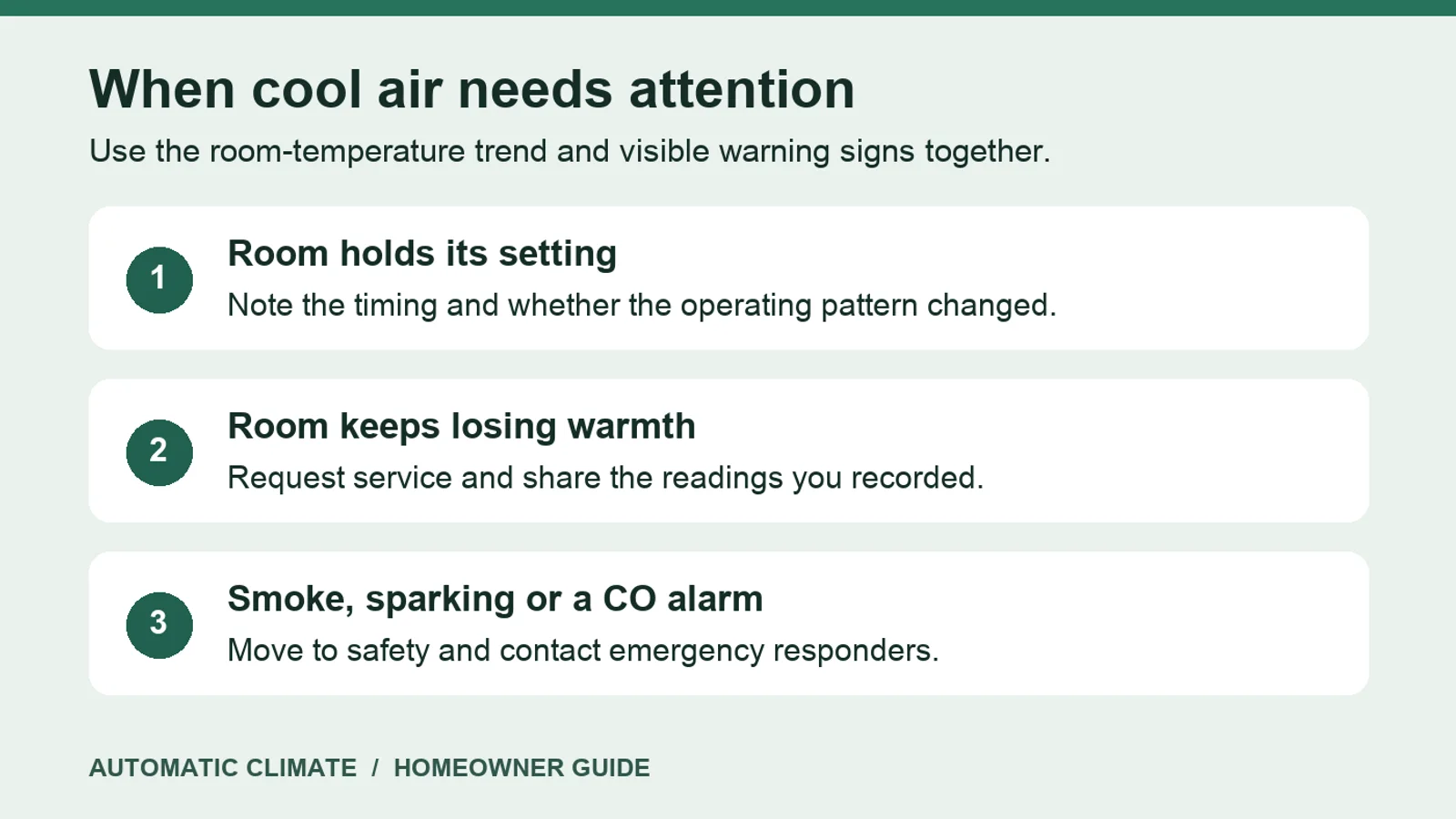
Cool-feeling airflow and a cooling room are different observations. A room that stays comfortable while the heat runs tells you more than a hand held over a register. A room that keeps losing warmth deserves attention, even when some air from the system feels warm.
Start with the temperature displayed on the thermostat and its set temperature. Record both without turning the setting up again. Notice whether the home is already comfortable, recovering after a scheduled change, or becoming colder during a steady heating call. Those situations need different explanations.
Use the same observation point when comparing readings. Moving a portable thermometer from a sunny window to a shaded hallway adds another variable. Keep any room thermometer away from direct sunlight and the supply stream. Its job here is to help describe comfort in that location, not to test equipment performance.
Holding the setting is reassuring, but it does not prove every part is working correctly. Backup heat can help maintain comfort, and a problem can affect only one room. Describe the pattern rather than declaring the system healthy from a single reading. If the whole home stays cold while heating runs, use the heating repair page for the broader decision.
What the comfort pattern tells you
| Observation | Useful next step |
|---|---|
| Mild airflow; room holds its setting | Record the pattern; hand feel alone does not identify a fault. |
| Cool airflow; room keeps losing warmth | Request a heating check rather than changing advanced controls. |
| Smoke, electrical danger or alarm | Leave danger and seek urgent help from a safe location. |
Qualitative observation guide, not an equipment diagnostic test.
Why does heat-pump air feel different from furnace air?
Heat-pump supply air can feel gentler than the hotter air homeowners associate with a gas furnace. The sensation alone does not tell you whether useful heat is reaching the room. Compare room comfort and temperature behavior before assuming that a mild supply stream means failed heating.
Carrier explains that heat-pump register air can naturally feel cooler than gas-furnace air. That distinction matters if you have moved homes or changed equipment. Expecting the same blast of heat from different heating systems creates an unreliable test.
For example, imagine a living room that reaches the selected temperature and stays there, yet the nearby register never feels furnace-hot. That is a reason to look at the room’s comfort before assuming trouble. This is an illustrative example, not an account of a customer visit or a promise about your system.
Skip generic online vent-temperature pass/fail numbers. Equipment design, outdoor conditions, airflow and operating stage affect what a technician expects to find. A reading from the register surface is also a different measurement from air temperature. You do not need to push a probe into ductwork or open a panel to collect useful homeowner observations.
What can you safely observe before requesting help?
Check 2: Note what the thermostat and fan are doing
When a heat pump is blowing cool air between heating calls, write down what the thermostat actually shows. A fan set to run continuously can move room-temperature air through the ducts even when there is no call for heat. Some controls show a separate indicator for auxiliary heat or for the fan. If you do not know what an icon means, take a photo for reference and check the control manual. You can describe the display without opening the thermostat or changing its setup.
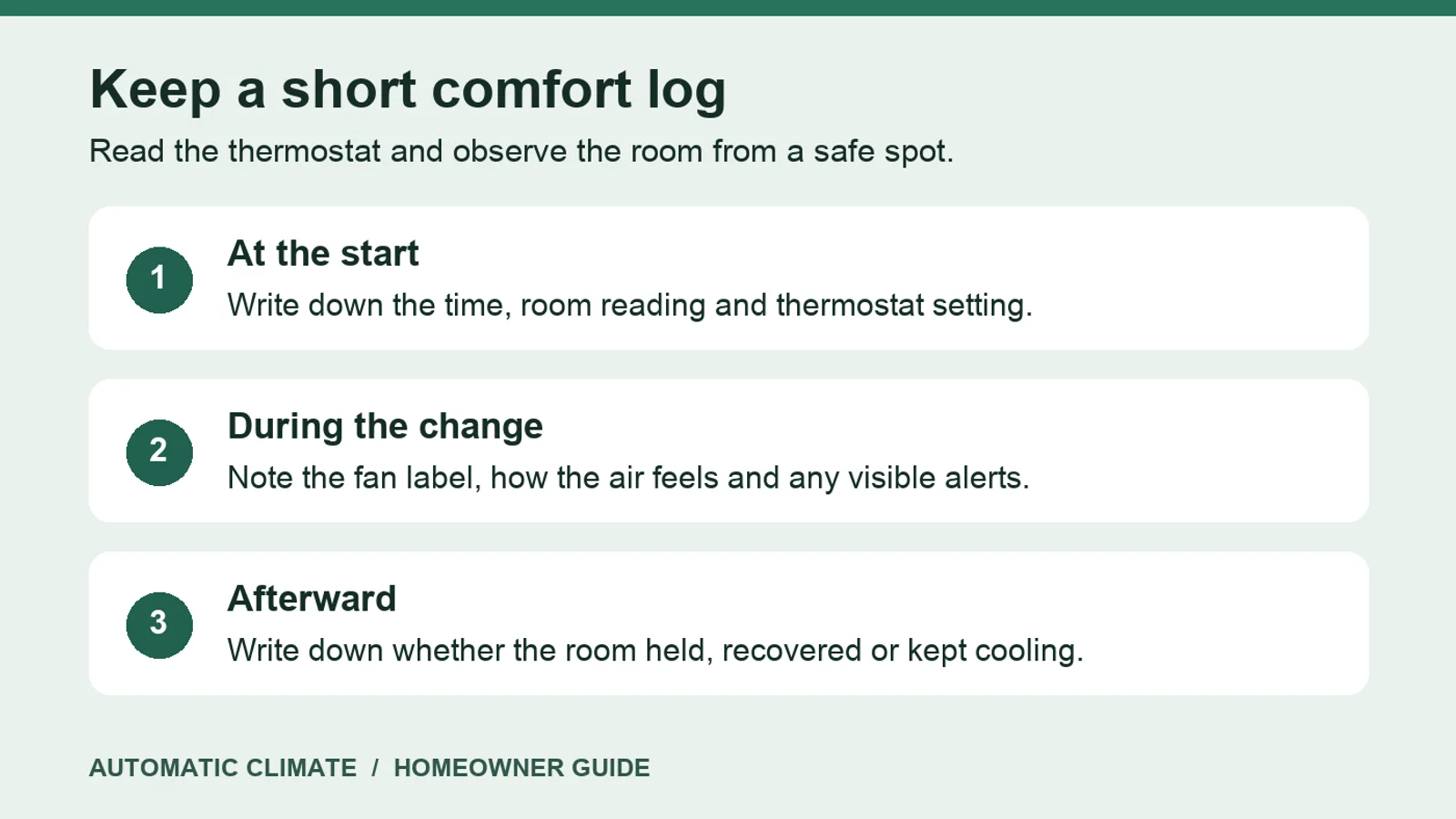
A short log might read: room below its setting, system on Heat, fan on Auto. If the room later reaches the setting, record that. If it falls farther away from the set temperature, record that too. Leave room for details about which rooms were affected, whether you had just adjusted the schedule and whether the behavior is new for your home.
A useful homeowner check records the operating mode, room temperature and airflow pattern without disturbing equipment controls. Keep the observations simple enough to repeat. Changing several settings at once can hide the original symptom and make it harder to explain when the cool sensation occurs.
Read the thermostat’s visible mode and fan labels. Note whether heating is requested and whether the fan runs between heating calls. Some controls use separate automatic settings for system mode and fan operation. Write down the actual labels instead of assuming that every use of “auto” means the same thing.
Check that furniture, rugs and curtains leave visible supply and return openings clear. Look at an accessible filter only if the equipment instructions allow safe access. Follow that manual for cleaning or replacement; leave hard-to-reach filters and anything behind equipment panels to the service professional.
From a safe distance, note any outdoor ice, a changed sound or an error message. Avoid opening cabinets, touching refrigerant lines, forcing fans or reaching through guards. Do not repeatedly reset a breaker or cycle power to see whether the symptom disappears. Carrier’s heat-pump troubleshooting resource distinguishes basic airflow observations from electrical and refrigerant work that belongs with a professional.
Record when the sensation starts and whether the room recovers afterward. A short note such as mild air between heating calls, with the room holding its setting is more useful than “air feels wrong.” Take a photograph of a visible warning display if you can do so without approaching a hazard.
Build a useful service note
- Read Record the visible mode, fan label, set temperature and room temperature.
- Observe Note whether comfort holds or falls, and when the sensation occurs.
- Share Describe fault messages, persistent ice or unusual sounds without opening equipment.
Collect only information you can see safely.
Can fan operation or defrost explain a brief change?
A brief change in airflow warmth can have a different meaning from continuously cold air and falling room temperature. Fan-only circulation and outdoor defrost are useful context, but neither should become a blanket explanation for a home that remains cold or a system showing warning signs.
The fan setting can affect when air moves through the registers. Note whether the airflow continues after an apparent heating call ends. If the thermostat reading itself seems off, see the thermostat accuracy guide. Do not change installer menus, wiring assignments or backup-heat lockouts to chase a warmer sensation.
Defrost removes frost from an outdoor heat-pump coil. Carrier identifies defrost as one possible reason for a temporary cool-air interval in heating mode. A brief interruption followed by normal comfort is different from repeated interruptions without recovery. Heavy ice that stays or unusually frequent changes should be described to a technician.
For the outdoor signs, read the guide to heat pump defrost. That resource handles the separate defrost question. Do not chip ice off equipment, pour hot water over it or force a defrost cycle. Smoke or a burning odor should never be dismissed as ordinary steam.

When should cool airflow prompt a service call?
Check 3: Look for warning signs and lack of recovery
A heat pump blowing cool air briefly during defrost can return to its usual pattern. From a safe viewing spot, note whether outdoor frost clears and indoor comfort recovers. If the unit is heavily iced, you hear a new grinding sound or the house keeps cooling, stop trying to diagnose the equipment yourself and request service. An alarm or immediate danger calls for the urgent safety steps above.
When you call, start with the problem in one sentence. For example, tell the dispatcher the heat pump is blowing cool air, the room keeps getting colder and the thermostat still shows a heating call. Follow with the timing and any alerts. A different report would be that the air felt cooler briefly, then the system returned to its usual sound and the room held the setting. Those observations help the team triage your request and give a technician a clearer starting point.
Request a heating check when cool airflow comes with persistent loss of room temperature, failure to recover comfort, heavy ice or a new harsh sound. These observations justify investigation but do not identify a failed part. An accurate diagnosis requires checking the installed system and its operating conditions.
Do not buy a thermostat, reversing valve or refrigerant service based only on an airflow sensation. Several faults can create similar symptoms. A service visit should establish what is happening before you choose a repair. Tell the technician whether the problem affects the whole home, one room or only certain times.
Electrical and combustion warnings change the next step. Stop experimenting with equipment that produces smoke, a burning smell, sparking or repeated breaker trips. If there is immediate danger, leave the area and call the fire department from a safe location. Do not delay urgent help to finish a temperature log.
A carbon monoxide alarm also calls for immediate action. An electric heat pump does not burn fuel, but a home can contain other fuel-burning appliances or a fuel-burning backup system. The US Consumer Product Safety Commission says to move outside to fresh air and call emergency responders when a CO alarm sounds. Stay outside until responders say it is safe to return.
What should Richmond homeowners share with Automatic Climate?
Automatic Climate can be contacted about heating repair when mild airflow becomes a comfort problem. Describe what the home is doing, what the thermostat shows and whether warning signs are present. Those details help frame the request without committing you to a diagnosis or a particular replacement.
Before contacting the office, gather the equipment model if it is visible without removing a cover. Add the approximate time the symptom began, any recent control changes and whether the room temperature holds or falls. Mention visible ice or fault messages separately from your description of register air.
Use the Automatic Climate heating repair page or contact Automatic Climate to request help. Ask what the visit includes and discuss repair options after the cause is established. This article does not promise appointment availability, a repair outcome or a price.
If the cold sensation comes from a window, doorway or floor away from a register, describe that separately. Air entering the building and air delivered by the heating system are different questions. This article stays with supply-air sensation; the heating repair guide linked above covers a broader whole-home heating shortfall.

Questions about cool-feeling heat-pump airflow
Heat-pump comfort questions often turn on the same distinction: what the air feels like versus what happens to the room. Use these answers to organize observations, then rely on the equipment manual and a professional check when the pattern is persistent, unfamiliar or accompanied by warning signs.
Should air from a heat pump feel hot?
Heat-pump air can feel milder than the supply air from a gas furnace. A very hot sensation is not the test of successful heating. Look at whether the room reaches and holds the selected temperature. Ask for help when comfort keeps falling short or the system’s behavior changes.
Does a steady room temperature prove the heat pump is working?
A steady temperature is reassuring evidence about comfort, but it does not verify every component. Backup heat or other heat sources can affect the room. Record what the thermostat displays and whether the operating pattern has changed. A new concern still deserves a conversation with a heating professional.
Should I raise the thermostat until the air feels warmer?
Keep the selected temperature steady while observing the symptom. Raising it repeatedly makes the original pattern harder to describe and can change how the system operates. For everyday programming choices, use your control manual. Leave advanced staging and backup-heat settings to a professional.
Does cool air mean the system needs refrigerant?
Cool-feeling supply air cannot establish a refrigerant problem. Airflow, controls, operating conditions and equipment faults can produce overlapping symptoms. Describe room-temperature behavior and visible warnings before requesting a diagnosis. Refrigerant testing and repair belong with a qualified professional, rather than a homeowner experiment or an assumed top-up.
Can I keep watching if the room is getting colder?
Persistent temperature loss is a reason to request help rather than continue experimenting with settings. Prioritize a safe warm place for anyone who is vulnerable to cold. If smoke, electrical danger or an alarm is present, follow urgent safety guidance immediately instead of waiting for a heating appointment.
What information is most helpful when I call?
Share the visible mode and fan settings, the set temperature, the displayed room temperature and whether comfort improves after heating runs. Add when the symptom occurs, any error message and whether all rooms are affected. Gather only information you can see safely without opening equipment or touching internal parts.
Ask about a heating check
Contact Automatic Climate about heat-pump comfort concerns. Describe room-temperature recovery, airflow behavior and warning displays so the repair request starts with clear observations.
- Discuss a heating repair request.
- Review the comfort symptoms you report.
- Discuss repair options after diagnosis.
Is your room staying cold while the heat runs?
Contact Automatic Climate with your thermostat readings and symptom notes to request a heating check.
Sources
AI-assisted article draft with AI-generated editorial lifestyle illustrations; images do not depict customer properties or completed work. Pending owner and media review.